
Your website is the single most critical asset in your modern sales pipeline. Long before a prospect speaks to your sales team or fills out an intake form, your digital interface has already established their perception of your credibility, technical sophistication, and market authority.
Yet, a staggering number of ambitious businesses continue to anchor their online presence to off-the-shelf website templates.
While pre-made themes and generic drag-and-drop builders offer low upfront costs and immediate setup, they routinely impose severe operational ceilings as a business grows. Here is a candid look at the technical and commercial limitations of template websites—and why custom-engineered digital systems drive sustainable growth.
1. The Cost of “Template Bloat” on Core Web Vitals
Pre-built commercial templates are created to serve thousands of completely different businesses. A single multipurpose theme might pack in five distinct slider libraries, dynamic carousels, mega-menus, parallax engines, and dozens of third-party widgets—most of which your site never needs.
-
Massive Payload Overhead: Even if you only use 10% of a theme’s visual modules, your visitors still download and parse the other 90% of the CSS and JavaScript bundles.
-
Core Web Vitals Penalties: Heavy client-side processing leads to inflated First Contentful Paint (FCP), delayed Largest Contentful Paint (LCP), and long Total Blocking Time (TBT).
-
Organic Search Impact: Search engines prioritize fast, stable, and responsive user experiences. When your technical foundation underperforms, your organic search rankings suffer regardless of your content quality.
Custom web engineering approaches performance from the ground up: every stylesheet is trimmed to the exact critical path, assets are served in modern formats, and scripts are deferred so above-the-fold content renders instantly.
2. Generic Interfaces Erode Brand Equity
A brand is far more than a logo placed at the top left of a screen. It is an intentional visual, verbal, and interaction system.
When potential clients visit three different competitor websites built on the same commercial themes, everything feels familiar—and completely forgettable.
Generic Template Custom Engineering
Standard grid layouts ──► Strategic user journeys
Cookie-cutter components ──► Bespoke visual identity
Bloated script libraries ──► Clean, zero-waste code
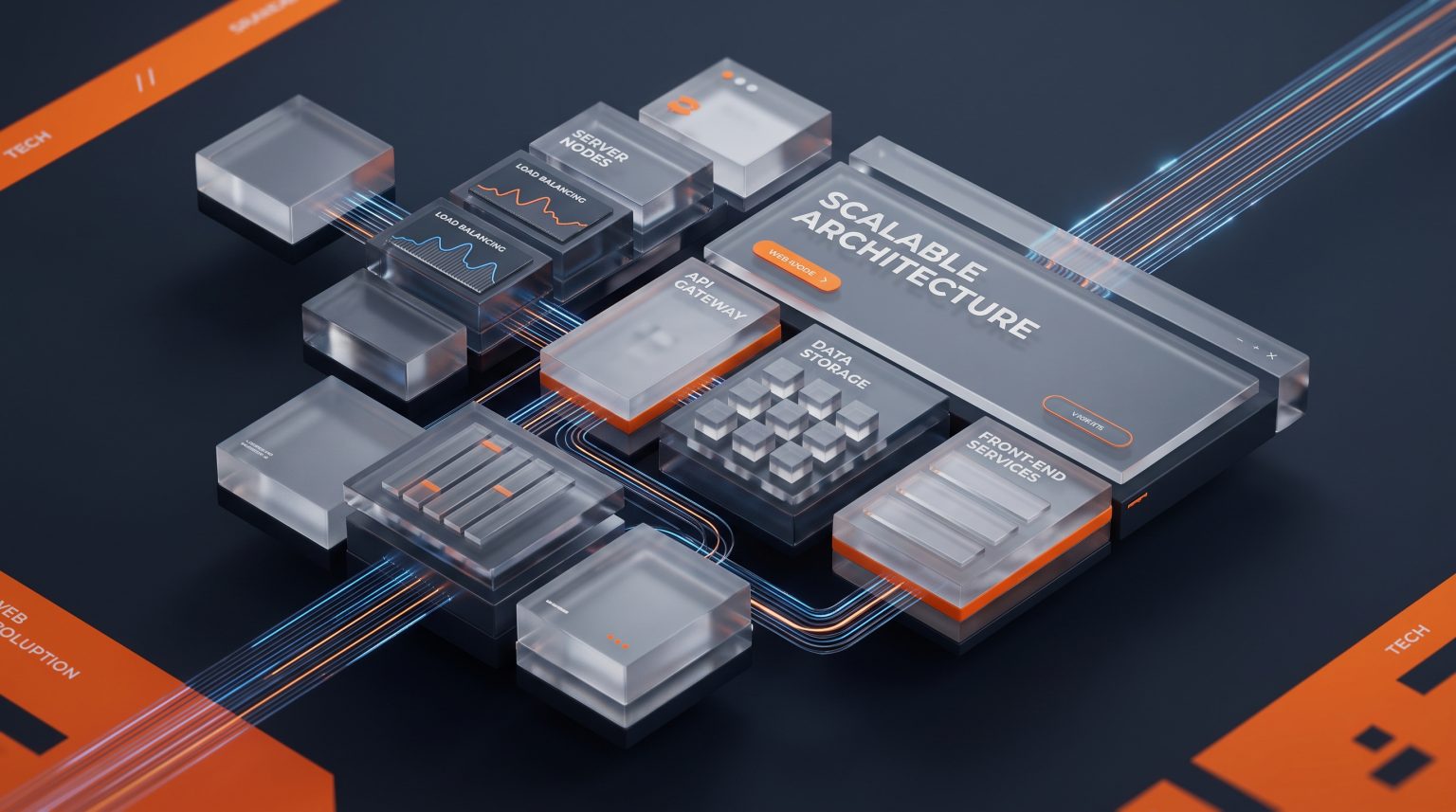
Plugin-dependent logic ──► Secure, scalable architecture
Custom UI/UX design tailors typography, spatial hierarchy, micro-interactions, and visual direction directly around your value proposition. It communicates attention to detail, builds immediate trust, and positions your agency or brand as an industry leader rather than a commodity provider.
3. The Scalability Wall & Plugin Fragility
Businesses do not stay static, and their digital infrastructure shouldn’t either. Template-driven sites frequently break down when attempting to implement:
-
Custom Business Workflows: Multi-step customer onboarding, dynamic pricing calculators, or bespoke client dashboards.
-
Enterprise API Integrations: Two-way synchronization with CRMs, payment gateways, internal ERPs, or marketing automation pipelines.
-
Plugin Dependency Hell: Stacking 30+ separate plugins to achieve desired features introduces database bloat, compatibility conflicts, and critical security vulnerabilities.
Building on a modular, custom tech stack gives you full architectural ownership. You can refactor features, scale database queries, and introduce new capabilities without fear that a routine platform update will crash your production site.
4. Designing for Conversion, Not Just Decoration
A high-performing website is not merely an aesthetic portfolio piece; it is an active conversion engine.
Off-the-shelf templates force your content into rigid, pre-defined containers that rarely align with your customers’ decision-making process. Strategic digital engineering aligns information architecture directly with real-world user intent:
-
Clear visual hierarchy that guides attention straight to your core value propositions.
-
Frictionless touchpoints optimized for seamless mobile navigation and rapid form completion.
-
Targeted micro-copy and responsive CTAs engineered to turn casual traffic into qualified inquiries.
Building a Scalable Digital Foundation
Investing in custom web development is not merely an aesthetic upgrade—it is a strategic decision that protects your site speed, strengthens your search rankings, and scales alongside your business objectives.
When intentional branding, intuitive user experience, and clean engineering converge, your website stops being a passive brochure and becomes your most reliable engine for client acquisition and long-term brand equity.
Ready to build an intentional, high-performance web experience?
Explore how custom engineering and bespoke digital branding transform your business growth at Orange Dot Tech.